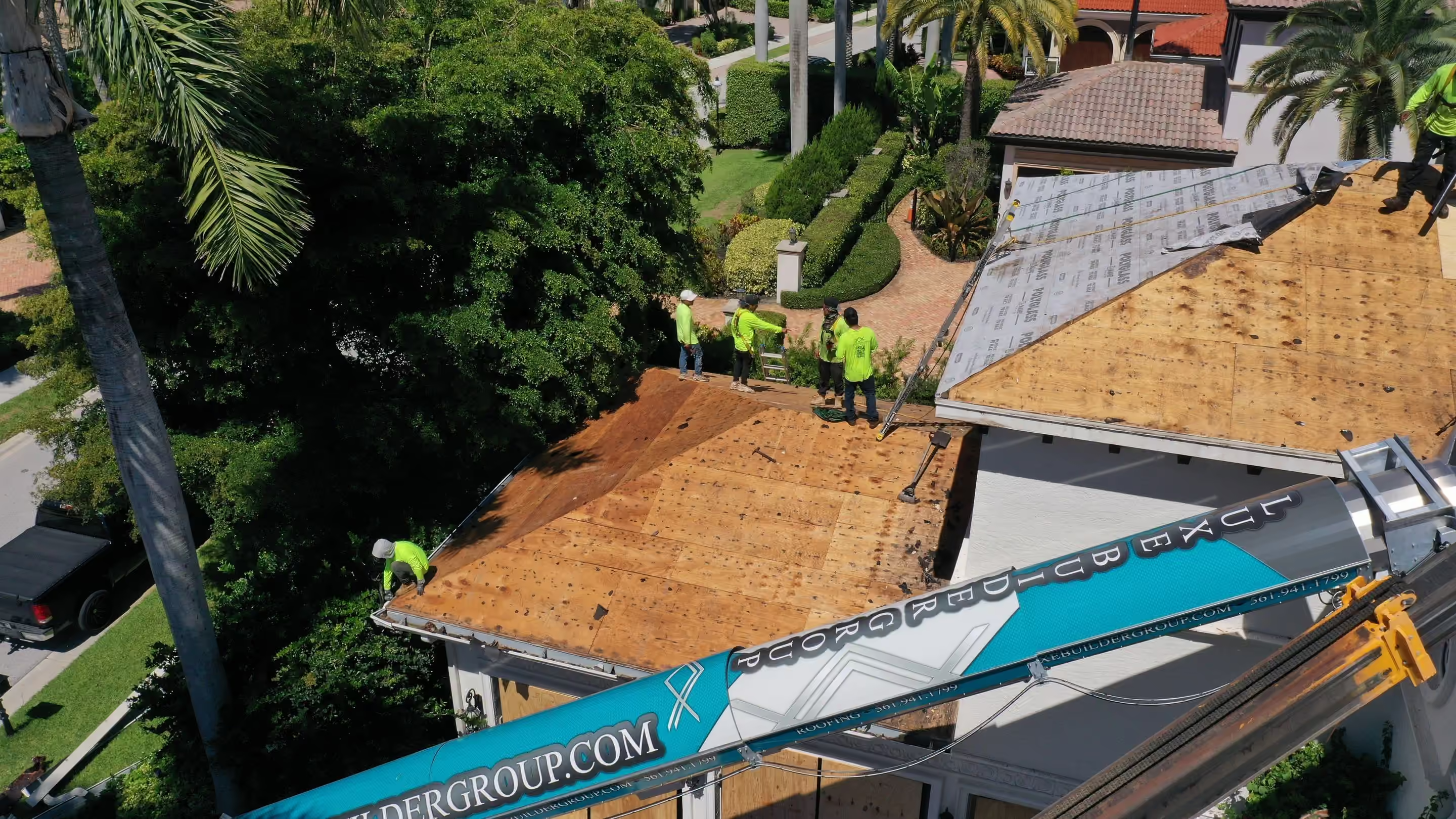
Skylight installers for Palm Beach County.
Set into the roof and flashed by crews that replace roofs for a living. Impact-rated glazing, every cut under permit.
CCC1335204Reviews
5.0Serving
Palm Beach CountyRoofing since
2015
A skylight is a hole in the roof.
The glass is the part you see, and it is almost never the part that fails. The weak point is the joint between the unit and the roof around it. That is why skylight work belongs to a roofing contractor. Ours is done by the same crews that run our full replacements. We install and replace skylights across Palm Beach and Martin counties, and we repair the ones worth keeping.
One rule governs all of it. Any cut into the roof deck here takes a building permit, even a new unit going into the same opening. We file that permit. We carry it through to the final inspection, so the record of the work exists on paper. The office answers weekdays, 7:00 in the morning to 7:00 at night.
On a raised frame, or flat to the roof.
Every skylight mounts one of two ways, and the roof type determines which one you get.
Mounted on a raised frame
A raised frame, flashed like a small chimney
The unit caps a wooden curb built up from the deck, flashed on all four sides. The curb lifts the glazing above the water sheeting down the roof, which is why tile roofs and low-slope sections get curbs: the surface is either too textured or too flat to seal a low flange against. A curb also makes the next replacement simpler, because a new unit can land on the existing frame without opening the roof around it.
Mounted flat to the roof
Flange to the deck, low against the roof
The unit fastens its flange straight to the roof deck and sits slim against the surface. On a shingle roof with decent pitch it is the cleaner install. It has fewer parts and a lower profile from the street. It needs enough slope to shed water off that flange. Below the slope the unit maker allows, the answer goes back to a curb. Which one your roof gets comes down to pitch and roof material. We write the spec into the quote.
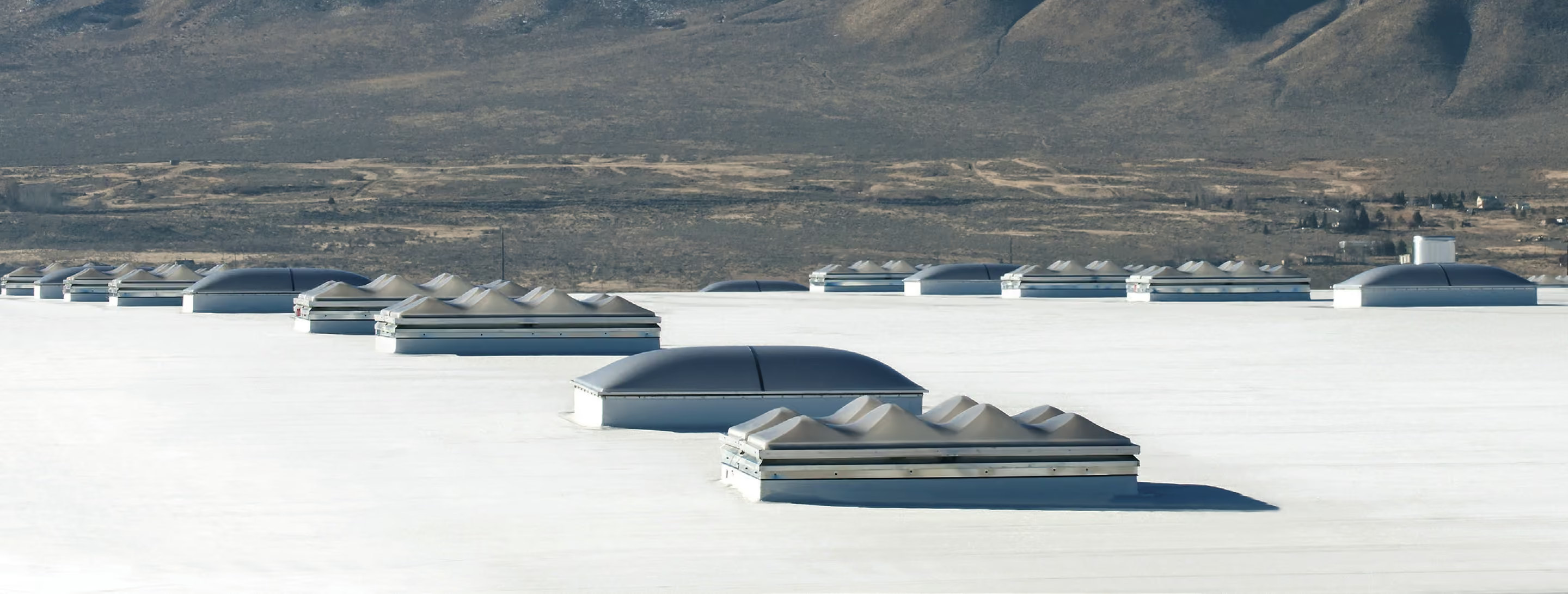
Skylights leak at the flashing.
When a skylight lets water in, the glass gets blamed, but the flashing is almost always the failure. Our fix starts under the surface. A stick-down membrane wraps the opening before any metal goes on, so the perimeter sheds water even when wind drives rain past the outer flashing. Then the step and counter flashing lap into the roof covering course by course, the same detail a chimney gets.
Close to the water we fasten with 316-grade stainless steel. Standard galvanized hardware corrodes in salt air in a fraction of its inland life, and a corroded fastener where something comes through the roof will eventually leak. Everything at a skylight opening is a joint, so the hardware grade matters more there than anywhere else on the roof.
Glazing rated for this coastline.
Palm Beach County's design wind speeds are among the highest in the country, and a skylight is a glazed opening in the surface that takes the highest wind loads. The units we set are impact-rated laminated assemblies: the interlayer holds the glass together when debris hits, so the envelope stays closed even with the pane fractured. Behind that rating sits testing to ASTM E1886 and E1996, or Miami-Dade's TAS series, depending on the approval path, and the systems we install carry approvals tested past the wind-uplift standard the code sets for coastal Palm Beach County.
The glass matters in the heat, too. Low-E coatings cut solar gain without darkening the room, which matters on east and west roof planes here. Vented units, including solar-powered ones, dump the hot air that pools at the ceiling. Velux is the name most owners ask for, and we install it. Fog between the panes means the sealed unit has failed and gets replaced, while moisture on the frame of the light well below means the shaft needs insulation work, and new glass will not cure it.
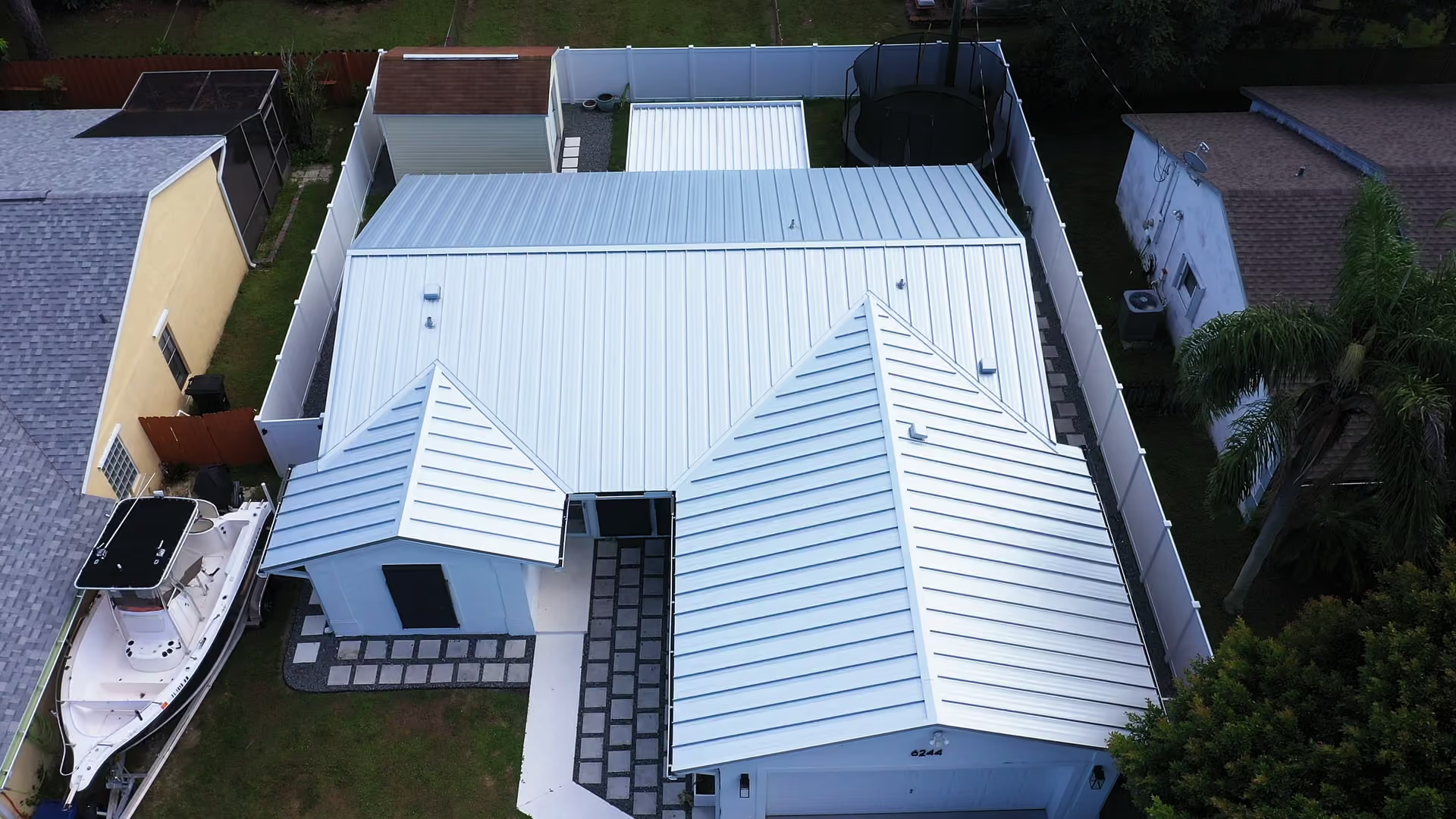
Replace them when the roof comes off.
A skylight's working life runs about the length of the roof around it, and the expensive part of replacing one is not the unit. It is opening the roof: the tear-back, the membrane, the flashing, the closure. During a reroof all of that is already open and already priced, so setting a new unit then costs the unit and little else.
A new roof around an old skylight leaves the oldest joint in the system sitting in the middle of a fresh surface, and when it ages out, the repair means cutting into a finished roof and paying for the same flashing work a second time. If a replacement is on your calendar, put the skylights in the same permit. The quote shows the job both ways, so the decision is yours and you make it once.
How the job runs.
Same order every time, whether the skylight rides inside a reroof or goes in on its own.
First look
Framing decides the size
Rafter or truss spacing at the opening sets what the structure takes without new framing. We measure that first, along with the deck condition. We also check how deep the light well runs down to the ceiling. Then the unit gets picked to fit the house.
The unit
Approval checked before ordering
Every unit we set carries a Miami-Dade product approval or a Florida Product Approval. We look it up on the state database before the order goes in, so the unit that arrives is documented for this jurisdiction.
The permit
Filed by us, closed by us
Any cut into the roof deck in Palm Beach County takes a building permit. That includes swapping a skylight into the same opening. We file it with the product approval and whatever drawings the county asks for. Then we run it through to the signed-off inspection.
The cut
Double headers restore the frame
The opening is cut to the maker's spec. Double headers tie the cut rafters back into the surrounding structure, so the deck around the skylight carries load the way it did before the saw came out.
The flashing
Membrane first, then metal
A stick-down membrane wraps the opening before any flashing goes on, and the step and counter flashing lap into the roof covering course by course. Near salt water the fasteners are 316-grade stainless, because galvanized hardware at a roof penetration corrodes and eventually leaks.
Closeout
You keep the record
Signed permit card, inspection record, product approval, warranty registration, plus drone photographs of the finished flashing and thermal imaging on request. One package, and it matters years from now at a closing table.
Where skylight work fits.
Most of our skylight work happens inside a reroof, and the replacement page covers that job first call to final inspection. The roof around the opening has its own page by material: tile, shingle, or metal, with the full lineup on the residential page.
What drives a roofing number sits on the cost page, and financing covers how owners pay for it. A skylight pouring water in the middle of a storm is emergency work, and our GAF standing has its own page. When you are ready, send the address and we will come look at the roof.