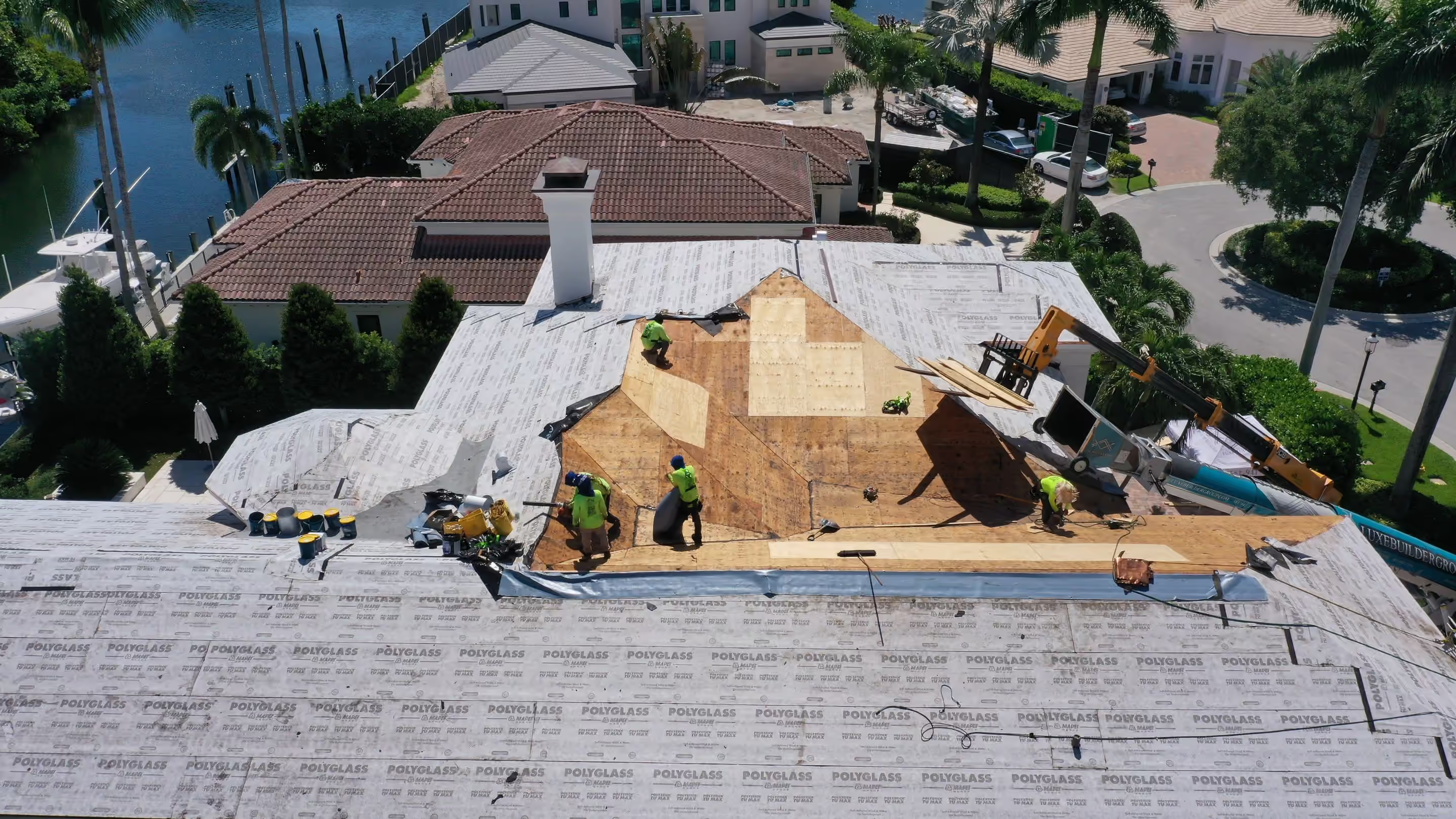
Emergency roof repair in Palm Beach County.
Leak diagnosis, storm tarping, flat-roof and metal work. An active leak goes to the front of the line.
CCC1335204Reviews
5.0Serving
Palm Beach CountyRoofing since
2015
Water coming in right now.
An active leak is first in line here. We stabilize the roof before we repair it. If the weather has not cleared, that means a tarp or a temporary patch first. The permanent fix follows, on its own permit and paperwork. In South Florida humidity, mold can start in wet building material within 24 to 48 hours.
Stay off the roof
A wet roof after a storm is bad footing over a long fall. Leave it to a crew with fall protection working in daylight.
Control the water
Move what matters out of the drip zone and set a container under it. If a ceiling is bulging, relieve it with a small hole at the low point so the water drains where you choose instead of where the drywall gives.
Photograph it
Shoot the ceiling and the water inside, then whatever roof damage you can see from the ground, before anything gets moved or covered. Those photos anchor the repair scope and stay in your records.
Call the shop
We answer the phones weekdays 7 to 7 at (561) 941-1799. An active leak moves to the front of the schedule. Leave a message outside those hours and you get a call back within 24 hours.
What we actually fix.
Repair work sorts by system, and each system fails in its own way.
Leak repair
The stain is rarely below the hole.
Water enters at a failed detail, travels along the waterproof layer or a truss, and drops at the first seam it finds, often nowhere near the entry point. We trace the path from both sides, on the roof and in the attic, and verify the entry before repairing anything. The common failure points in this county: pipe-boot collars cracked by sun years before the roof itself is done, flashing that got caulk instead of replacement, failed skylight flashing and aged perimeter seals that leak only in wind-driven rain, wind-creased shingles, and gutters backing water under the first course. When the skylight unit has failed rather than the seal around it, we handle <a href="/services/skylight-installers/">skylight replacement</a> integrated with the roof work. The fix replaces the failed component, photographed before and after, because sealant smeared over a symptom fails on the next wind-driven rain.
Storm tarping
Over the ridge, screwed to the deck.
A tarp that holds runs from above the ridge down past the damage, so water sheds over it, and gets anchored with wood strips screwed into the decking rather than nailed through shingles. Set that way it rides out the gusts that follow a storm. Florida sun is hard on tarp material, so figure roughly 30 to 90 days of protection and treat that window as the deadline for the permanent repair. Flat and low-slope roofs tarp differently than pitched ones, and water ponding on the temporary covering gets managed while the covering is up. On a condo building, or across the several roofs of an HOA community, storm response runs as documented triage: occupied units secured first, then the rest of the property on a written plan the board and the property manager can circulate to owners as one record. Associations that want neutral-colored tarps during the recovery get them. How that runs across a portfolio is on our <a href="/property-management/">condo and HOA roofing</a> page.
Flat and low-slope
Leaks start at the details.
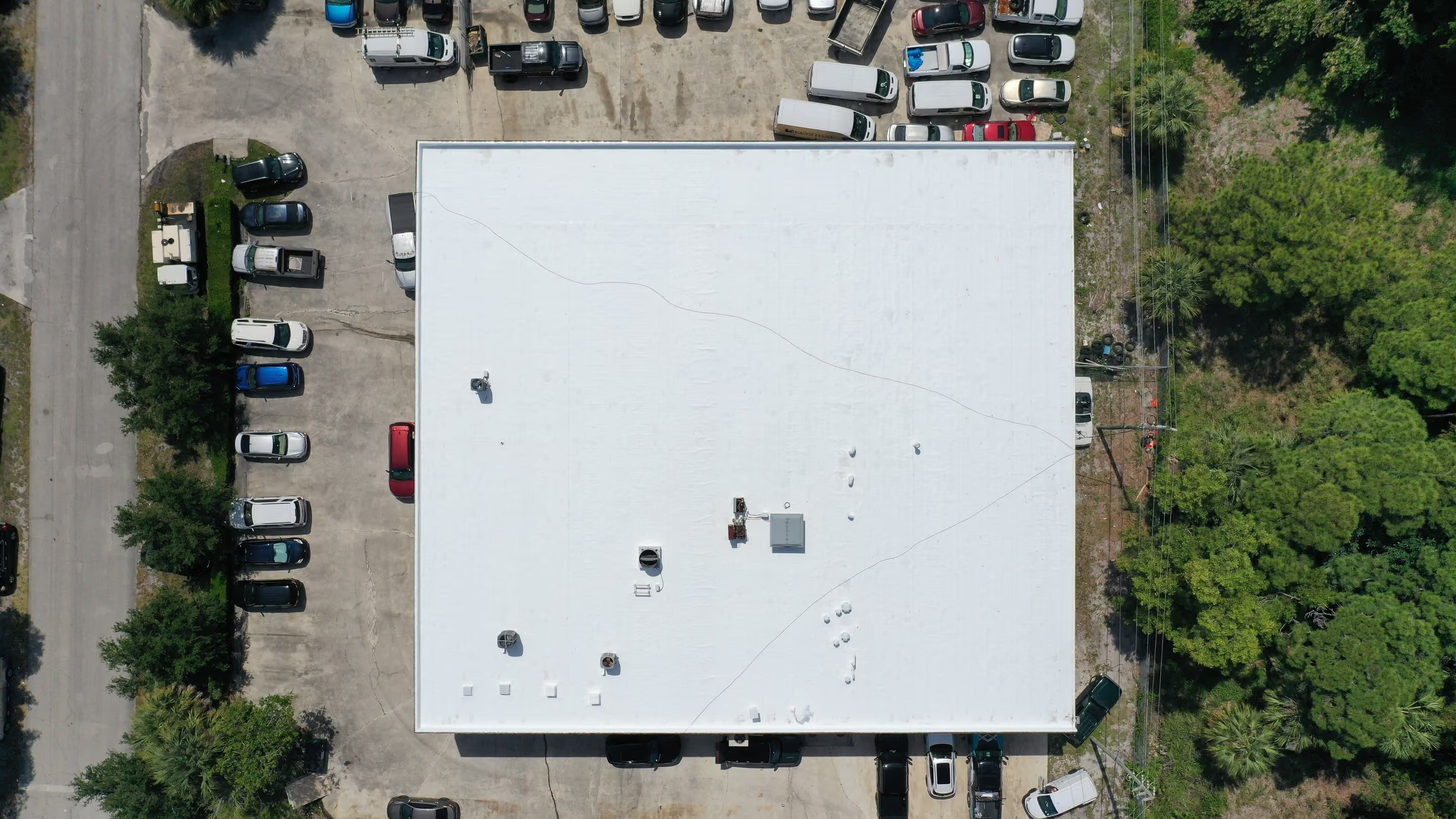
On TPO, PVC, modified bitumen, and built-up roofs, failures concentrate at drains, penetrations, equipment curbs, and flashing terminations, almost never in the open field of the membrane. Roof surfaces here run past 140 degrees in summer sun, and that daily expansion cycle works every seam. Repair means patching and re-welding the failed detail, then correcting what caused it: cleared drains and scuppers, tapered insulation where water ponds. An infrared moisture scan finds what the surface hides. Business properties run through our <a href="/commercial-roof-repairs/">commercial roof repair</a> division.
Metal repair
Fastener fatigue comes first.
Daily heat cycling backs screws out and wears their neoprene washers long before the panels are done, and salt air works on exposed cut edges and lower-grade flashing near the water. Repair runs from fastener and washer replacement through seam resealing to flashing work matched to the profile on the roof. On a sound metal roof, that kind of restoration can add 10 to 20 years before replacement enters the conversation.
Waterproofing
A membrane over a sound, dry deck.
A liquid-applied coating system can reset an aging flat roof for 15 to 25 years of service, and heat-welded TPO or PVC runs 20 to 30. What sits underneath decides whether either lasts: adhesion testing and a moisture survey come first, because a coating over wet insulation traps the water and blisters the system. When the tests fail, we say so and price the tear-off instead.
Repair it, or replace it.
One leak on a roof with years left in it is a repair. Leaks showing up in different spots, or a roof at the end of its Florida service life, is a pattern, and patching a pattern buys months rather than years. In this sun and salt air, shingle commonly runs 15 to 20 years. Tile runs 25 to 50 depending on the waterproof layer beneath it, metal 40 to 60.
The inspection settles it, in photographs. If the honest answer is a new roof, we price both paths in writing. We also tell you which one we would pick for our own house. The roof replacement page covers the bigger job. The cost page covers what drives the price. The financing page covers how owners pay for that job, including Florida PACE for qualifying scopes.
On the record with the county.
In Palm Beach County, some repairs need a building permit before work starts. That covers the roof deck, the structure, and any job over 25% of the roof surface. We check that line on every scope. We file where the code requires it, and we stay with the job until the building department signs off.
Where the tear-back finds saturated decking, the section gets new deck material fastened to the wind-uplift standard the code sets for coastal Palm Beach County, and a stick-down secondary water barrier goes down before the surface goes back on. You keep the record: the photo file and the closed permit, the two things a future buyer's inspector will ask about.
Repair calls run across the county: Tequesta and Palm Beach Gardens close in, West Palm Beach and Wellington mid-county, Hobe Sound across the county line to the north and Delray Beach to the south. Same standard on every call. We find the entry point before we repair anything, and we photograph the finished work.