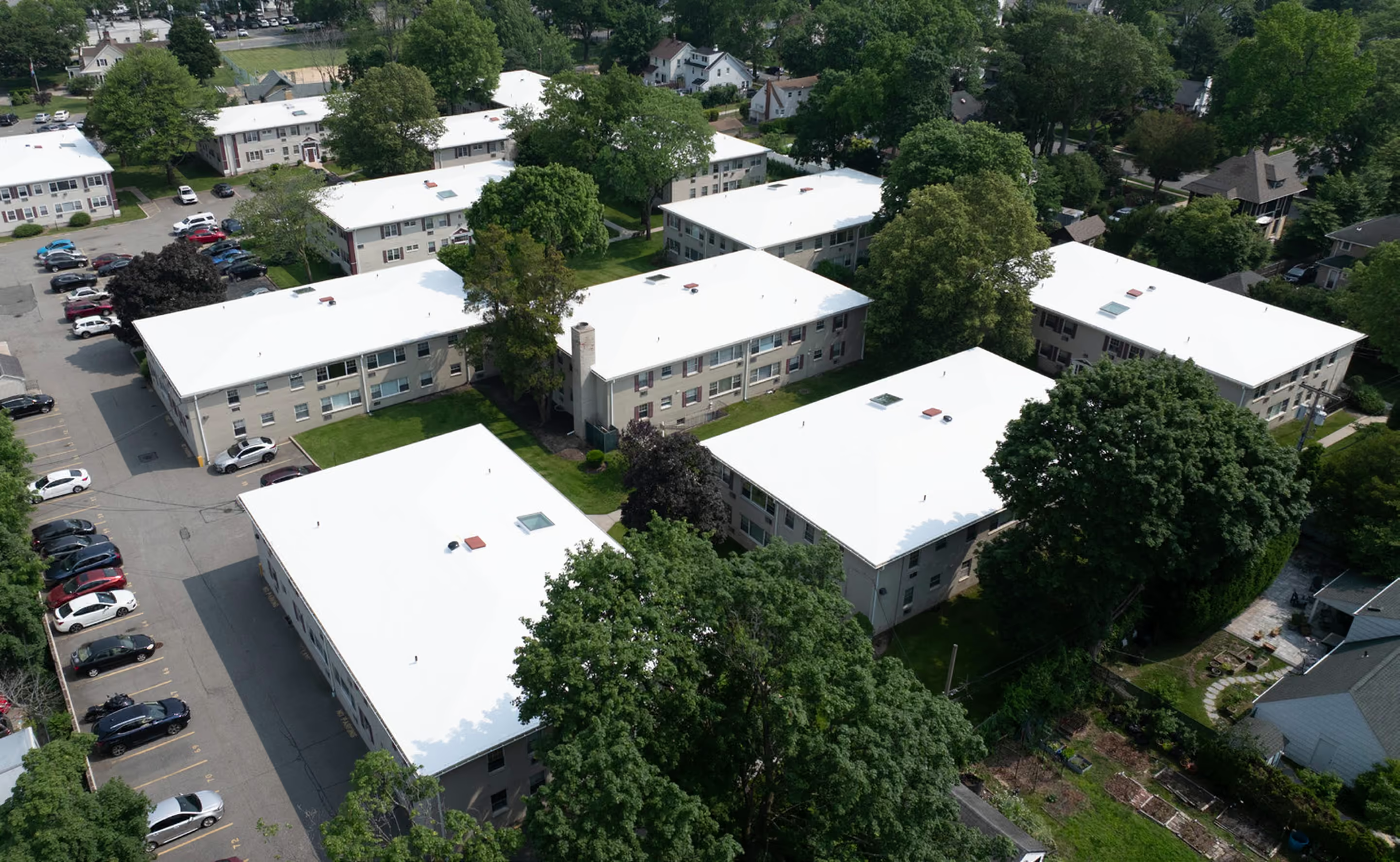
Commercial TPO roofing.
The most common single-sheet membrane in low-slope roofing, welded at every seam so the finished roof is one sheet. Installed across Palm Beach County.
CCC1335204Reviews
5.0Serving
Palm Beach CountyRoofing since
2015
What TPO is.
TPO stands for thermoplastic polyolefin. It is a single-sheet membrane: one engineered sheet, rolled out over insulation and a cover board, that becomes the entire weather surface of the roof. Each overlap between rolls is welded shut with hot air, so the finished roof behaves like one sheet of material.
The membrane has been on low-slope roofs for more than 20 years. Over a billion square feet of it goes down every year, more than half of all the single-sheet roofing installed today.
Chemistry
Flexible without plasticizers
Some single-sheet membranes rely on plasticizers to stay pliable and stiffen as those leach out over the years. TPO bends because of what the polymer is, so the sheet keeps its flexibility as it ages.
Weathering
Built for heat and UV
Sun does more damage to a Florida roof than rain does. Long-term heat and UV resistance is the property TPO was engineered around, and it is most of why the membrane holds up on a deck that bakes all summer.
Mold
Resists fungal growth on its own
Florida humidity feeds mold and algae on a damp roof. TPO resists that growth on its own, with no biocides mixed into the sheet.
Traffic
Thicker sheets where the roof gets walked
The membrane comes in more than one thickness. A roof with package units on it takes service visits year round, and a thicker sheet adds the puncture resistance that foot traffic calls for.
Why the seams are welded.
A low-slope roof holds water after rain, sometimes for a day, and every joint in the membrane sits in it. Seams are where flat roofs leak first. On a single-sheet roof, the seam matters more than the sheet itself.
A TPO seam is made with a hot-air welder that heats both faces of the overlap and presses them together until the two sheets fuse into one piece of plastic. The result holds more strength than a taped or glued joint, and there is no adhesive in it to dry out or let go. Our crews probe every seam once it cools, and a weld that fails the probe gets cut out and redone.
A white roof and the cooling bill.
A dark flat roof in South Florida absorbs the sun and passes that heat down through the insulation into the space below, and the air conditioning carries that load all afternoon. White TPO reflects most of the sunlight before it ever becomes heat, and the surface sheds what warmth it does pick up back to the sky instead of holding it.
On a building that cools year round, the difference lands on the utility bill every month. A cooler surface also moves through smaller temperature swings, which is easier on every seam and flashing.
Screwed down or glued down.
There are two ways the membrane goes down, and the building picks between them.
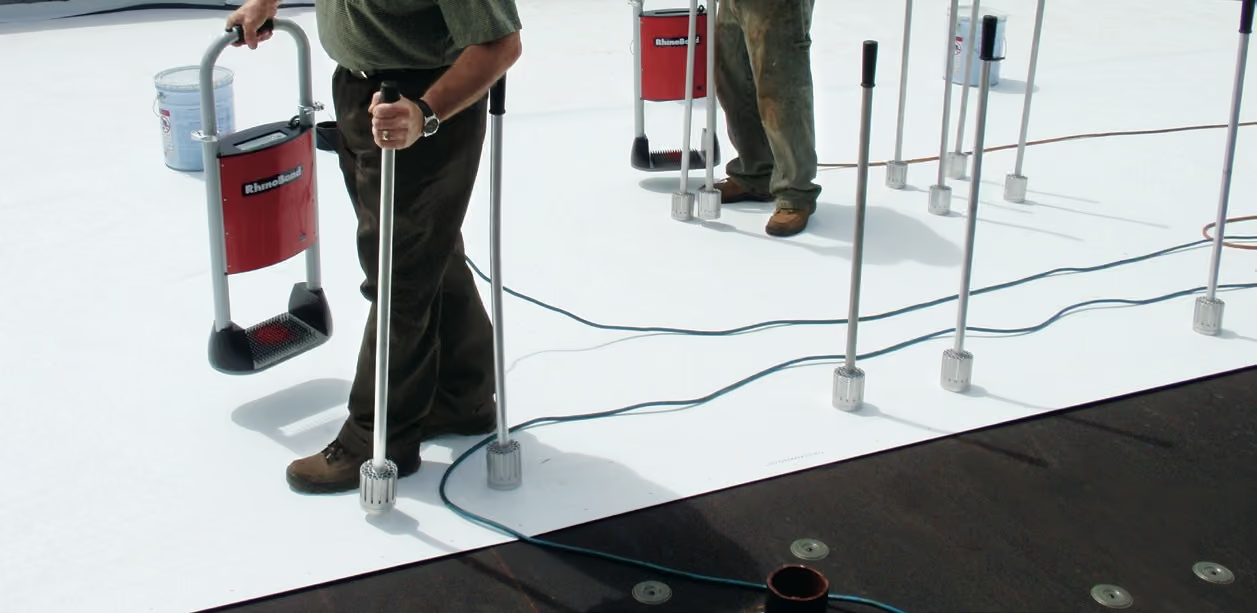
Mechanically attached
Fastened in rows, welded over
Plates and fasteners anchor the sheet to the deck along each seam line, and the next roll welds over the row, so every fastener ends up sealed under a welded seam. It installs fast, and it is the more economical of the two.
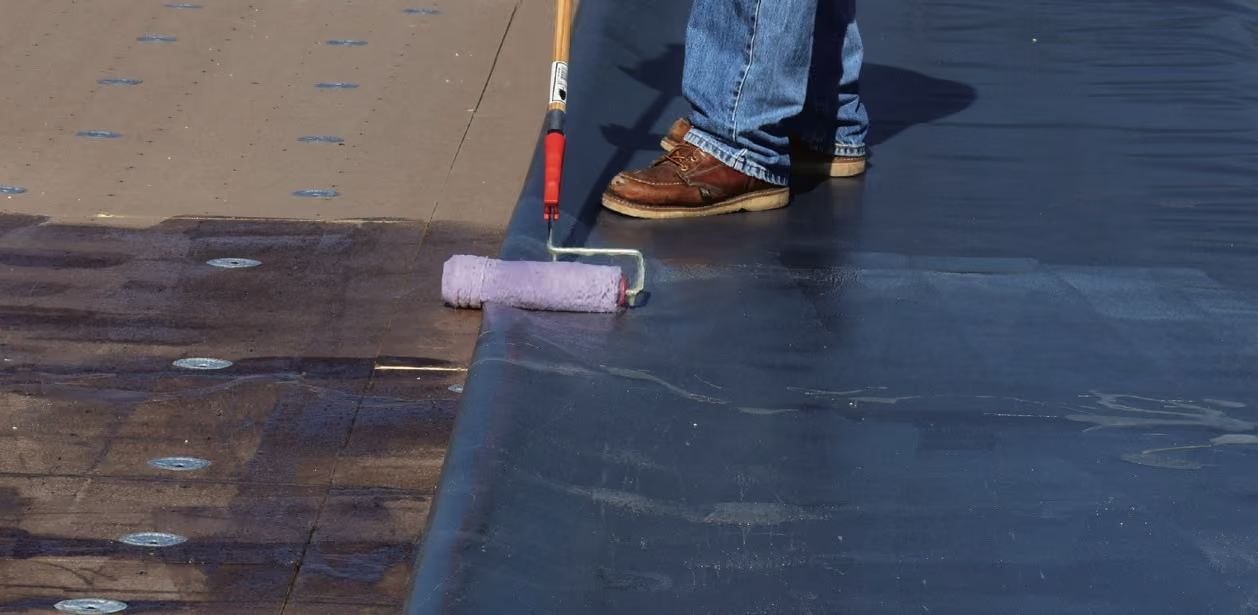
Glued down
Bonded across the whole sheet
Adhesive bonds the membrane to the surface underneath across its full area instead of at rows, so there are no fastener lines for wind to work against and the sheet lies dead flat. It is the usual answer when design pressures climb.
Which assembly your roof gets is an engineering answer, settled on paper first. Palm Beach County's design wind speeds are among the highest in the country, so every TPO roof we install is engineered to the wind-uplift standard the code sets for coastal Palm Beach County, from systems that carry Miami-Dade product approvals. The deck and the building's exposure set the design pressures; the permit drawings record the answer before a roll comes off the truck.
New membrane or a coating.
The divider is what is under the membrane. A roof that is aging but structurally sound, with dry insulation under a worn surface, does not need to come off: a liquid-applied coating restores it in place with no tear-off, and we install those too. That option lives on the commercial coatings page.
Once water gets into the insulation, the math flips. Coating over wet boards seals the moisture in with the roof, and the failure keeps moving underneath the new surface. Saturated insulation has lost its R-value and its hold on the fasteners, and no surface treatment gives either back. That roof needs a new membrane, and TPO is usually the economical way to put one on.
One open seam or a single ponding spot is neither of those. That is a repair, and it has its own page: commercial roof repair. Whichever way it goes, we get on the roof before we recommend anything, and the findings come to you in writing with photos.
The guarantee a qualifying roof carries.
TPO is one of the systems GAF writes the EverGuard Diamond Pledge on, and our commercial standing with GAF lets us register it on a qualifying installation. The guarantee covers the installed system as a whole, workmanship included, and the NDL in its name stands for no dollar limit: a covered leak gets repaired edge to edge, with no cap on what the fix can cost.
Terms run 10 to 35 years depending on the system and the certification behind it, and the guarantee transfers if the building sells. We register it at closeout, so the coverage is on paper when the job closes.
EverGuard Diamond Pledge NDLDollar limit
NoneTerms
10 to 35 years by systemWorkmanship
Included
The rest of the commercial lineup.
TPO earns its market share, and some buildings still call for something else. The full comparison lives on the commercial roofing page.